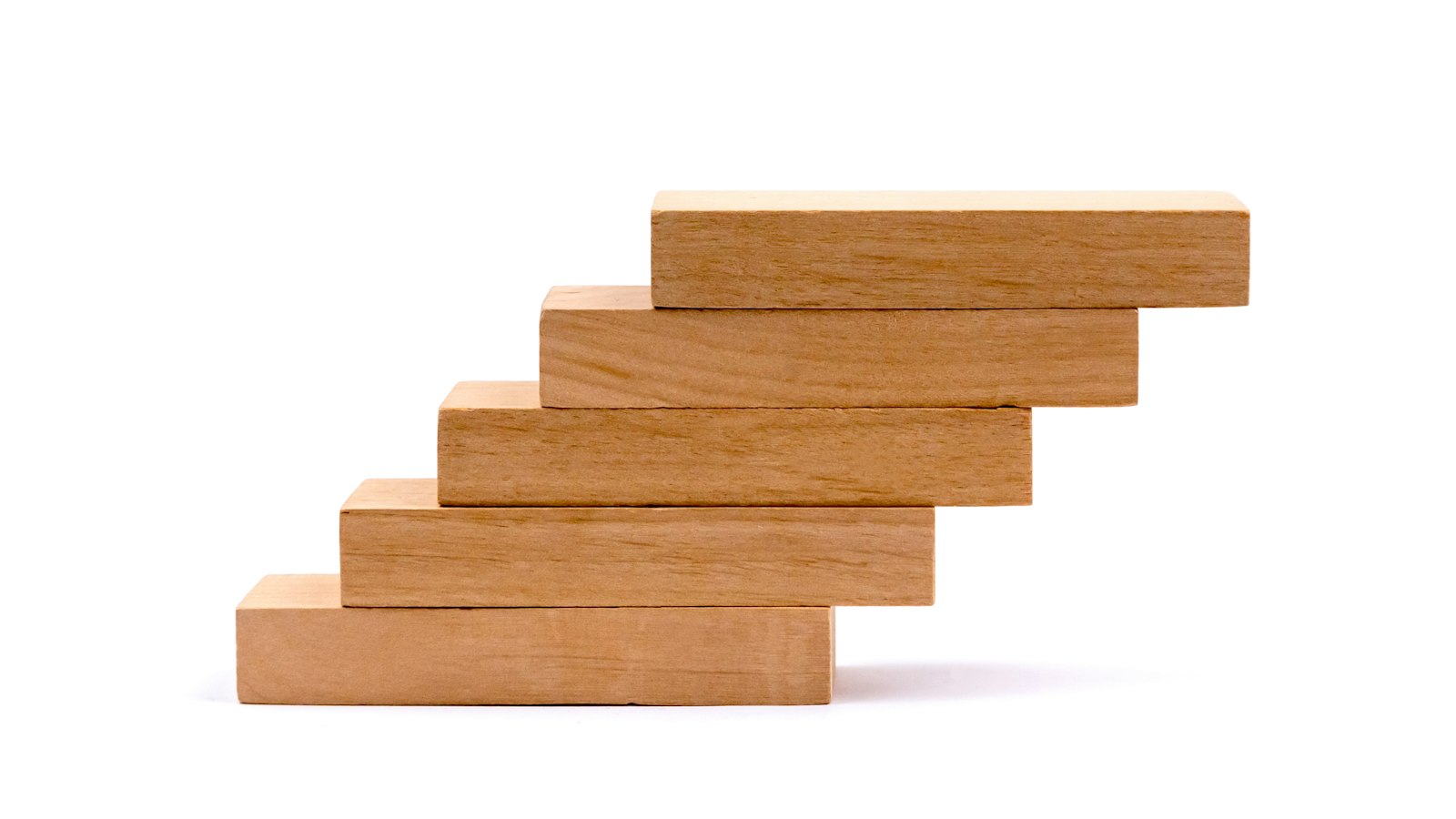
The grades available on each tier
Foundation GCSE Maths covers grades 1 to 5. Higher covers grades 4 to 9. That creates a deliberate overlap at grades 4 and 5: both tiers can lead to either grade, but only Higher can lead to grades 6, 7, 8 or 9.
The grade range is the clearest difference, but it is not the only one. The Foundation practice shelf begins with core number, calculation, proportion, algebra, geometry, probability and statistics. The Higher practice shelf develops the shared material and includes later work such as surds, functions, circle theorems, algebraic proof and more demanding trigonometry.
Aiming for grade 5 does not automatically settle the choice because grade 5 sits in both ranges. The teacher has to judge which paper gives the student the sounder route to showing what they know. A grade needed for a future course matters too, but the school or college offering that course is the right place to check its entry requirement.
Where Foundation and Higher overlap
The tiers are not two unrelated courses. Factors and multiples, ratio, percentages, forming and solving equations, graphs, transformations and many other skills appear in the middle of the GCSE journey. Revision Library gathers these shared skills on the Foundation and Higher crossover shelf, while the GCSE Maths topic guides show the grade band attached to each topic.
Shared content can still be tested differently. A student may recognise the topic on either tier but meet a longer chain of reasoning, a less familiar context or more demanding algebra on Higher. This is why knowing the topic name is not enough evidence for a tier change. The student also needs to complete mixed questions accurately and explain the working without relying on prompts.
For example, three identical notebooks cost £1.60 each. A club spends £8.40 on the notebooks and two identical pens. What does one pen cost? This is a shared calculation problem: the site's topic-frequency material lists Calculation Problems for both Foundation and Higher.
Working: 3 x £1.60 = £4.80 for the notebooks. £8.40 - £4.80 = £3.60 for the two pens. £3.60 / 2 = £1.80 for one pen.
If a pupil sets up those three steps and writes £4.60 for 3 x £1.60, the plan is sound and the error may be an isolated arithmetic slip. If they cannot explain why the notebook cost is subtracted, or why the remainder is divided by 2, that points to a method gap to investigate. A useful page to bring to the teacher has the original question, every written step, the pupil's note about what each amount represents, and a second attempt at a similar question without prompts. One example or score cannot decide a tier; the teacher can compare this with patterns across classwork, assessments and mixed papers.
The published formats held on the site show three papers per tier for each of AQA, Edexcel and OCR, all lasting 90 minutes. AQA and Edexcel list 80 marks per paper, while OCR lists 100. Those figures describe the boards covered here; students should use the details supplied by their own school and board for the definitive paper information.
How the tier decision is usually made
A good tier conversation starts with a run of evidence: topic tests, mixed assessments, mock papers, classwork and how independently the student can begin an unfamiliar problem. One paper can reveal a weakness, but it should not erase months of steadier work. The teacher can also see whether lost marks come from a fixable topic gap, rushed arithmetic or questions that remain out of reach even after teaching.
The student's view belongs in that conversation. Higher may keep the full grade range open, but repeated guessing at inaccessible questions can make revision less productive. Foundation may give a student more opportunities to demonstrate secure methods, but its highest available grade is 5. The decision is about the paper on which the student can earn marks consistently while keeping the grades they may need available.
If the evidence is close, use a complete paper from the student's own board and mark every step, rather than comparing only the final score. The GCSE Maths practice papers can support mixed practice, and the broader GCSE Maths resit guide shows how to turn a marked paper into a short revision plan. The teacher should still make the entry recommendation from the school's own evidence and timetable.
Consider two fictional marked assessments. In Assessment A, a pupil earns 42 out of 60 marks: 42 / 60 x 100 = 70%. In Assessment B, the pupil earns 48 out of 80: 48 / 80 x 100 = 60%.
The second raw score is higher, but its percentage is lower. Comparing percentages accounts for the different totals; a higher mark total alone does not show the stronger proportion. If both assessments had the same total, a higher mark would also mean a higher percentage, so the raw-score shortcut fails here because the totals differ.
Even 70% against 60% cannot choose a tier or predict a grade. These fictional assessments cover different content and have different demand, so the percentages do not make them equivalent evidence or show how either result maps to a grade.
The teacher needs the wider pattern across classwork, assessments and mixed papers, including the content attempted and how independently the pupil handles it. These two results can prompt a conversation, but they are not a tier-selection rule.
What to practise before deciding
Begin with the overlap. Secure arithmetic, fractions, percentages, ratio, equations, graphs and core geometry help on either tier, so time spent repairing those gaps is not wasted if the eventual entry changes. The full GCSE Maths library is useful when the weak area is known, and the maths study area brings together topic practice and paper tools when the student needs a mixed check.
Then sample work from the likely tier under realistic conditions. Mark it for method as well as answers and keep a short record of why marks were lost. A student considering Higher should not jump straight to grade 9 material; the grade 9 guide is for high-attainment technique after the foundations are secure, not a test of whether Higher is suitable.
Our own resource
Revision Library
Best for grade-banded worksheet packsA tier decision becomes easier when the practice is separated into Foundation, shared and Higher material. Revision Library provides a Foundation shelf, a crossover shelf and a Higher shelf, with full mark schemes so a student and teacher can look beyond the headline score.
Use the topic guides when an error points to a specific method, then return to mixed questions to check whether the method holds without a prompt. This gives useful evidence for a school conversation, but it does not replace the teacher's knowledge of the student or the board's definitive information.
If the immediate question is which resources to combine rather than which tier to enter, the GCSE Maths revision websites guide compares teaching, practice and past-paper options. Parents who want to support the routine without reteaching the course can use the parent guide to GCSE Maths at home.
Browse GCSE Maths practiceIn the numbers
- packs
- 133
- question pages
- 2,901
GCSE Maths practice packs across Foundation, crossover and Higher, each with a full mark scheme
How to choose
Keep the grade range visible. Foundation can lead to grades 1 to 5, while Higher can lead to grades 4 to 9. If a future course asks for a particular grade, check that requirement with the school or college before agreeing the entry.
Ask the teacher which evidence is driving the recommendation. A useful answer should point to a pattern across classwork, assessments and complete papers, then identify the topics or question styles that would need to improve before the decision is reviewed.
Choose practice from the student's current weak point, not from the tier label alone. Work on a named skill, mark it, and then test it inside a mixed paper. When the student needs more printable sources for that cycle, compare worksheets with the teacher and choose ones that match the named skill.
Review the choice at the point the school recommends. Do not switch tiers repeatedly after each score, and do not use a national grade-boundary guess as a substitute for the evidence from the student's board, papers and teacher.
Frequently asked questions
What is the highest grade on Foundation GCSE Maths?
Can you get a grade 4 or 5 on either tier?
Is Foundation GCSE Maths an easier version of Higher?
Who decides whether a student takes Foundation or Higher?
Revision Library resources in this article
How we wrote this
The grade range for each tier is the one printed on the site's own Foundation and Higher practice papers and books, and the topic split follows the grade band on each GCSE Maths guide and the Foundation, Higher and crossover shelves. The guidance stays with what those sources establish and leaves school entry decisions and current board rules to the student's teacher and exam board.