Revision Library
Choose a subject
Menu
History
Need a new topic?
Missing a topic, found a bug, or want something added?

Book 4 of 4

GCSE History 10-Minute Tests 4

Explaining Success and Failure in Settlement of the Great Plains, Identifying and Explaining Turning Points in the American West, Anglo-Saxon and Norman England, 1060-66: Anglo-Saxon Government, Economy and Society and 11 more

Level
GCSE · Edexcel 1HI0
Series
GCSE History 10-Minute Tests, book 4 of 4
Suitable for
Years 10-11, Edexcel

History is examined through a small number of question styles that reward structure as much as knowledge. Each volume works through one period in order and keeps the mark scheme for every exam-style question, so the difference between a described answer and an explained one is visible.

FreePDF download · 2027 edition · 53 A4 pages
  • One file, prints straight to A4
  • No account, no password

Workbooks like this one, with 14 topics, 83 questions and mark schemes at the back, are usually printed and sold by publishers. This one is one of 558 free PDFs on the shelf.

Pages
53 A4 pages
Chapters
14 worksheet chapters
Questions
83
Answers
From page 40
Working time
About 2h 20m

What is inside

14 chapters · answers from p40

Each chapter starts with a page showing its marks and a suggested time, followed by the questions. The mark schemes for all 14 chapters are at the back, so the book works for homework, a timed test or revision.

  1. 01Explaining Success and Failure in Settlement of the Great Plains4 questions · about 10 min Topic guide: Explaining Success and Failure in Settlement of the Great Plainsp3
  2. 02Identifying and Explaining Turning Points in the American West8 questions · about 10 min Topic guide: Identifying and Explaining Turning Points in the American Westp5
  3. 03Anglo-Saxon and Norman England, 1060-66: Anglo-Saxon Government, Economy and Society7 questions · about 10 min Topic guide: Anglo-Saxon and Norman England, 1060-66: Anglo-Saxon Government, Economy and Societyp8
  4. 04Anglo-Saxon and Norman England, 1060-66: The Last Years of Edward the Confessor and the Succession Crisis8 questions · about 10 min Topic guide: Anglo-Saxon and Norman England, 1060-66: The Last Years of Edward the Confessor and the Succession Crisisp11
  5. 05Anglo-Saxon and Norman England, 1066: The Rival Claimants, Gate Fulford and Stamford Bridge6 questions · about 10 min Topic guide: Anglo-Saxon and Norman England, 1066: The Rival Claimants, Gate Fulford and Stamford Bridgep14
  6. 06Anglo-Saxon and Norman England, 1066: The Norman Invasion and the Battle of Hastings8 questions · about 10 min Topic guide: Anglo-Saxon and Norman England, 1066: The Norman Invasion and the Battle of Hastingsp17
  7. 07Anglo-Saxon and Norman England, 1066-87: Establishing Control: the Earls, the Marcher Earldoms and Castles8 questions · about 10 min Topic guide: Anglo-Saxon and Norman England, 1066-87: Establishing Control: the Earls, the Marcher Earldoms and Castlesp20
  8. 08Anglo-Saxon and Norman England, 1068-71: Anglo-Saxon Resistance5 questions · about 10 min Topic guide: Anglo-Saxon and Norman England, 1068-71: Anglo-Saxon Resistancep23
  9. 09Anglo-Saxon and Norman England, 1069-87: The Harrying of the North and Changes in Landownership4 questions · about 10 min Topic guide: Anglo-Saxon and Norman England, 1069-87: The Harrying of the North and Changes in Landownershipp25
  10. 10Anglo-Saxon and Norman England, 1075: The Revolt of the Earls5 questions · about 10 min Topic guide: Anglo-Saxon and Norman England, 1075: The Revolt of the Earlsp27
  11. 11Anglo-Saxon and Norman England, 1066-88: The Feudal System and the Church6 questions · about 10 min Topic guide: Anglo-Saxon and Norman England, 1066-88: The Feudal System and the Churchp29
  12. 12Anglo-Saxon and Norman England, 1066-88: Norman Government: Sheriffs, the Forest and Domesday5 questions · about 10 min Topic guide: Anglo-Saxon and Norman England, 1066-88: Norman Government: Sheriffs, the Forest and Domesdayp32
  13. 13Anglo-Saxon and Norman England, 1066-88: The Norman Aristocracy and Bishop Odo4 questions · about 10 min Topic guide: Anglo-Saxon and Norman England, 1066-88: The Norman Aristocracy and Bishop Odop35
  14. 14Anglo-Saxon and Norman England, 1066-88: William I and the Succession5 questions · about 10 min Topic guide: Anglo-Saxon and Norman England, 1066-88: William I and the Successionp37
  15. AnswersMark schemes for every chapterp40

Each chapter is drawn from one of our worksheet packs. Follow a chapter title for the full pack on its own page, or browse every GCSE History pack. Every book on the shelf is a complete printable workbook of up to 120 A4 pages.

Explore this volume

GCSE History 10-Minute Tests 4 includes Explaining Success and Failure in Settlement of the Great Plains (from page 3); Identifying and Explaining Turning Points in the American West (from page 5); Anglo-Saxon and Norman England, 1060-66: Anglo-Saxon Government, Economy and Society (from page 8); Anglo-Saxon and Norman England, 1060-66: The Last Years of Edward the Confessor and the Succession Crisis (from page 11); Anglo-Saxon and Norman England, 1066: The Rival Claimants, Gate Fulford and Stamford Bridge (from page 14); Anglo-Saxon and Norman England, 1066: The Norman Invasion and the Battle of Hastings (from page 17); Anglo-Saxon and Norman England, 1066-87: Establishing Control: the Earls, the Marcher Earldoms and Castles (from page 20); Anglo-Saxon and Norman England, 1068-71: Anglo-Saxon Resistance (from page 23); Anglo-Saxon and Norman England, 1069-87: The Harrying of the North and Changes in Landownership (from page 25); Anglo-Saxon and Norman England, 1075: The Revolt of the Earls (from page 27); Anglo-Saxon and Norman England, 1066-88: The Feudal System and the Church (from page 29); Anglo-Saxon and Norman England, 1066-88: Norman Government: Sheriffs, the Forest and Domesday (from page 32); Anglo-Saxon and Norman England, 1066-88: The Norman Aristocracy and Bishop Odo (from page 35); Anglo-Saxon and Norman England, 1066-88: William I and the Succession (from page 37).

Worked question 6 - Anglo-Saxon and Norman England, 1066-88: The Feudal System and the Church

Open the included worksheet

Describe one feature of the oath sworn by landholders in 1086.

Answer and mark scheme

Question 6

CreditAnswer or working
B1a valid feature of the oath, e.g. it was taken by all landholders, not only the tenants-in-chief; it was taken at Salisbury in 1086; it made the king the lord of every landholder; it was sworn after the Danish threat of 1085
B1supporting detail of that feature, e.g. it made a landholder's duty to the king come before his duty to his own lord; it was sworn at a great assembly of landholders after the survey was ordered; it was a response to the threat from Cnut IV of Denmark
  • Answer: all landholders; king before own lord

Question 5 - Anglo-Saxon and Norman England, 1066-88: The Feudal System and the Church

Open the included worksheet

Give two reasons why bishops moved their sees to towns after 1066.

Answer and mark scheme

Question 5

CreditAnswer or working
B1any one valid reason, e.g. towns were centres of royal government, trade and population; a bishop had more influence there; the royal castle gave protection; the move was ordered by the Council of London of 1075; larger churches could be built; it suited the reform movement
B1a second, different valid point (both marks may come from the same category if the points are distinct)
  • Answer: centres of power; castle protection

Question 4 - Anglo-Saxon and Norman England, 1066-88: The Feudal System and the Church

Open the included worksheet

State two obligations a vassal owed his lord.

Answer and mark scheme

Question 4

CreditAnswer or working
B1any one valid obligation, e.g. military (knight) service; supporting the lord in war; attending the lord's court; paying feudal dues or aids; loyalty (fealty); giving counsel
B1a second, different valid point (both marks may come from the same category if the points are distinct)
  • Answer: military service; court, dues or loyalty

Question 4 - Anglo-Saxon and Norman England, 1060-66: The Last Years of Edward the Confessor and the Succession Crisis

Open the included worksheet

State one fact about Edward the Confessor's family that left England without an obvious adult successor.

Answer and mark scheme

Question 4

CreditAnswer or working
B1any one of: his marriage to Edith produced no children; Edward had no son of his own; his nephew Edward the Exile died in 1057 soon after returning to England; his great-nephew Edgar the Aethling was still a boy; no obvious adult member of the royal house was available; any other valid fact about Edward's family and the succession
  • Answer: his marriage to Edith produced no children

Question 5 - Anglo-Saxon and Norman England, 1060-66: The Last Years of Edward the Confessor and the Succession Crisis

Open the included worksheet

State one reason why Tostig was unpopular in Northumbria.

Answer and mark scheme

Question 5

CreditAnswer or working
B1any one of: high taxation; he was seen as an outsider from the south; harsh or unjust rule; he had nobles murdered (e.g. Gospatric in 1064); he was often absent at court; he ignored local law and custom; any other valid reason
  • Answer: high taxation

Question 3 - Explaining Success and Failure in Settlement of the Great Plains

Open the included worksheet

State one environmental challenge that homesteaders on the Plains faced.

Answer and mark scheme

Question 3

CreditAnswer or working
B1any one valid environmental challenge, e.g. droughts, extreme winters or blizzards, lack of timber or water, grasshopper plagues, prairie fires, hard sod
B1supporting detail, e.g. droughts reduced crop yields, causing poor harvests and livestock losses during dry years
  • Answer: Droughts that reduced crop yields, causing poor harvests and livestock losses.

Question 2 - Explaining Success and Failure in Settlement of the Great Plains

Open the included worksheet

State two features of the Mormon community organisation that helped make Salt Lake settlements successful.

Answer and mark scheme

Question 2

CreditAnswer or working
B1cooperative labour for building irrigation canals and farms
B1central leadership that organised land allocation and migration
  • Answer: Cooperative labour to build and maintain irrigation, and central leadership organising land and migration.
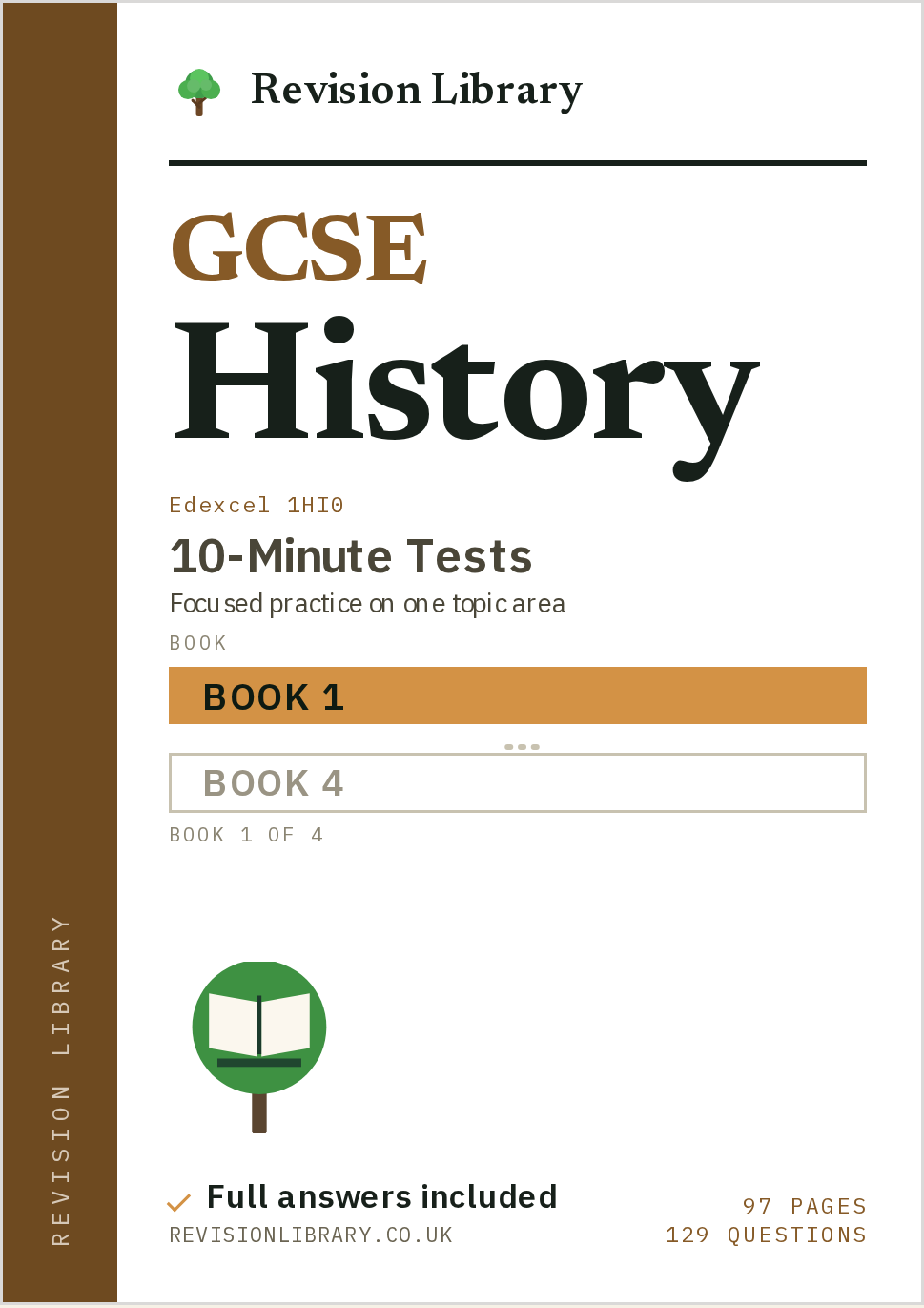
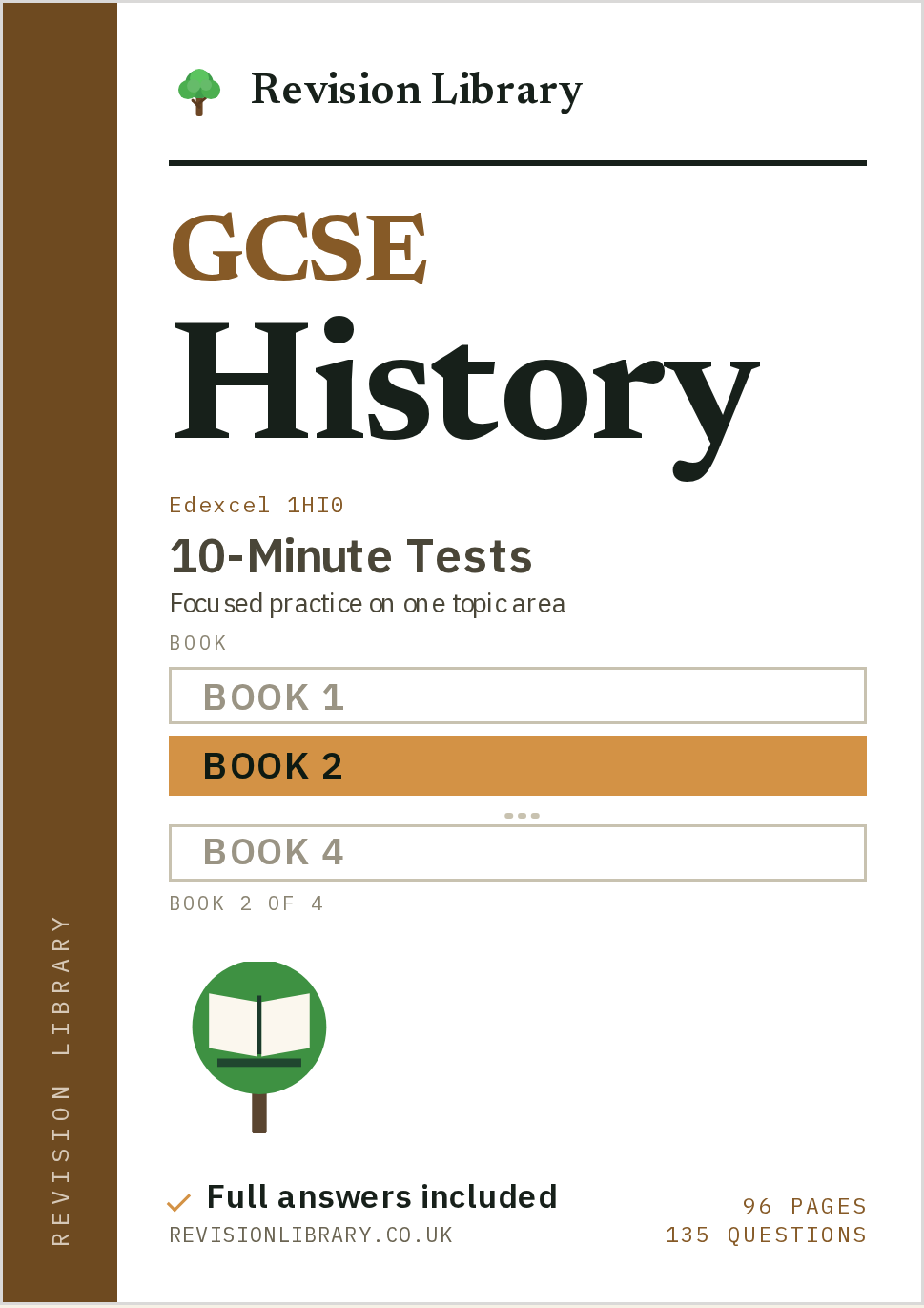
GCSE History 10-Minute Tests runs to 4 volumes

Book 4 of 4 · 337 pages in the set

Each book is a separate free PDF.

Volume 1

97 pp · 129 Qs

Medicine in Britain, c1250-c1500: Ideas About the Cause and Treatment of Disease, Medicine in Britain, c1700-c1900: Vaccination, Germ Theory and Public Health, Medicine in Britain, c1500-c1700: The Medical Renaissance and Ideas About the Cause of Disease and 23 more

Volume 2

96 pp · 135 Qs

Early Elizabethan England, 1558-1559: Elizabeth's Succession and Character, Elizabethan Government in 1558: Court, Privy Council and the Problems Elizabeth Inherited, Early Elizabethan England, 1559: The Religious Settlement and 22 more

Volume 3

91 pp · 118 Qs

Weimar and Nazi Germany, 1924-1929: The Recovery of the Republic, Nazi Germany, 1933-1939: The Police State, Nazi Germany, 1933-1939: Propaganda, Censorship and the Churches and 19 more

Volume 4 · this book

53 pp · 83 Qs

Explaining Success and Failure in Settlement of the Great Plains, Identifying and Explaining Turning Points in the American West, Anglo-Saxon and Norman England, 1060-66: Anglo-Saxon Government, Economy and Society and 11 more

More GCSE books

GCSE History Topic Workbook 1

101 pp · 158 Qs

Medicine in Britain, c1250-c1500: Ideas About the Cause and Treatment of Disease, Medicine in Britain, c1700-c1900: Vaccination, Germ Theory and Public Health, Medicine in Britain, c1500-c1700: The Medical Renaissance and Ideas About the Cause of Disease and 11 more

Want a different mix of topics?

Sitting an exam soon? Build a GCSE History mock paper or print a ready-made one.